

Clean toys feel better! Save $84


The Chess Anal Bead Theory and the Netflix Documentary

At a Glance
- The scandal in one line: In 2022, 19-year-old Hans Niemann beat world champion Magnus Carlsen at the Sinquefield Cup, and the internet decided (with no evidence) that he'd done it using vibrating anal beads.
- Where things stand in 2026: Niemann was never found guilty of cheating against Carlsen or any other player over the board. His $100 million defamation lawsuit was dismissed by a federal judge and later settled. Carlsen still won't take the loss back.
- What Netflix's Untold: Chess Mates actually adds: Mostly a recap. Niemann railing against what he calls a chess mafia, chess.com executives painting him as delusional, archival footage of pundits running with the rumor, and a quietly damning admission that the controversy was very good for the chess industry's bottom line.
- What the rumor got wrong: Anal beads aren't a covert communication device. They're a pleasure product. The "spy gadget" framing only works because mainstream culture still treats prostate pleasure as inherently illicit.
"Every conversation I have about chess leads to anal beads," Hans Niemann says in Netflix's new documentary Untold: Chess Mates. He's not exaggerating. Four years after a viral conspiracy theory accused him of using a vibrating sex toy to beat world champion Magnus Carlsen, the rumor has outlived the chess match, the lawsuit, the settlement, and most of the news cycles in between. And now it has a Netflix docuseries credit attached.
So let's talk about it properly. The technical question of whether the rumor was ever physically possible has been answered. The legal question of whether Niemann actually cheated has been answered too. What hasn't been answered is the more interesting question: why this rumor, and why it stuck.
The Scandal, Briefly
Quick recap. In September 2022, Niemann — then 19, a self-made online player who'd honed his craft hustling chess in Washington Square Park — beat the reigning world champion Magnus Carlsen at the Sinquefield Cup in St. Louis. Carlsen withdrew from the tournament. Two weeks later, in an online rematch, Carlsen resigned after one move and shut off his webcam.
Niemann had admitted to cheating online as a teenager, and chess.com had previously banned him. He denied cheating against Carlsen, and no investigation ever found evidence that his online history extended to over-the-board play. He sued Carlsen, chess.com, grandmaster Hikaru Nakamura, and others for $100 million in defamation. A federal judge dismissed the case. The parties settled in 2023.
But somewhere in between all of that, a single Reddit comment rewrote the story: what if Niemann was receiving signals through vibrating anal beads? Elon Musk amplified it. Trevor Noah and Piers Morgan ran bits on it. A cam site offered Niemann $1 million to play chess nude to prove he wasn't using a sex toy. And a Dutch software engineer named Ron Sijm built an open-source program called ButtFish — adapted from an existing tool called Sockfish — to test whether morse-code vibrations could realistically transmit chess moves through an insertable device. His own framing on GitHub: mostly a meme.
What the Documentary Actually Adds
The honest answer is: not much. Untold: Chess Mates mostly retreads the saga without resolving it. Niemann pushes a theory that chess.com and Carlsen coordinated to ruin his career ahead of a planned merger. Carlsen and chess.com leadership push back, calling him delusional. Carlsen still insists Niemann cheated in 2022, even though the platform's own investigation never found evidence that the cheating extended to real-world play.
The most quietly revealing moment is from chess.com co-founder Erik Allebest, who — paraphrasing — admits the anal bead controversy has been outstanding for the chess industry's bottom line. chess.com's daily active users had already rocketed from around one million to five or six million during the pandemic, on the back of The Queen's Gambit and lockdown boredom. The scandal kept the platform in the headlines long after the chess world would otherwise have moved on.
Think about that for a second. The world's biggest chess platform monetized a rumor that turned a 19-year-old into a punchline about a sex toy. Pundits cracked jokes. Late-night comics ran with it. The rumor moved more attention than the chess.
And then Netflix bought the rights.
So Could the Rumor Have Actually Worked?
This is the part everyone skipped past on the way to the joke. Could a person realistically receive complete chess moves through vibrations from an insertable device, in real time, without giving themselves away on camera?
Technically possible? Sort of. Practically plausible in a high-stakes broadcast match? Not really.
A chess board is an eight-by-eight grid. Every square has a coordinate — A1 through H8. To transmit one move, you'd need to communicate two coordinates without error, in a few seconds, while sitting under live cameras across from an opponent reading your face for tells. The ButtFish prototype proves you can encode that in morse code and pulse it through a vibrating device. The lab version works.
The actual version, in a broadcast match against a former world champion, is a different problem. The latency is real. The signal-to-noise ratio is brutal. And anyone who's ever used a vibrating device knows the sensation isn't exactly engineered for high-bandwidth data transfer.
Anal beads also weren't designed for any of this. They were designed to feel good. The reason this rumor stuck around isn't that the engineering is convincing. It's that the mental image is too funny to let go of.
Why the Joke Has Lasted Four Years
The reason a thinly sourced Reddit theory has outlasted most of the actual news stories from 2022 isn't really about chess. It's about the assumption underneath it.
Anything involving the prostate gets coded as inherently embarrassing, illicit, or comedic. The rumor works as a punchline because mainstream culture still treats prostate pleasure as a category that's borderline unsayable in mixed company.
Compare it to any other pleasure or wellness category. A runner with a smartwatch isn't a scandal. A massage chair on the patio isn't a scandal. A vibrator on a nightstand barely registers in 2026. But the moment a device goes anywhere near the prostate, it gets re-coded as illicit — even when the actual context is a wellness product that millions of people own and use.
That gap is what Untold: Chess Mates doesn't close. The doc leans into the absurdity rather than untangling it. That's a fine entertainment choice. It's a less great one for the broader cultural conversation, which is already several steps behind where it should be.
What the Prostate Actually Is (and Isn't)
Quick reset, since we're here.
The prostate is a walnut-sized gland that sits just inside the rectum, toward the front of the body. It's packed with nerve endings, which is why prostate stimulation feels the way it does, and why the wellness category around it is real, well-studied, and growing fast.
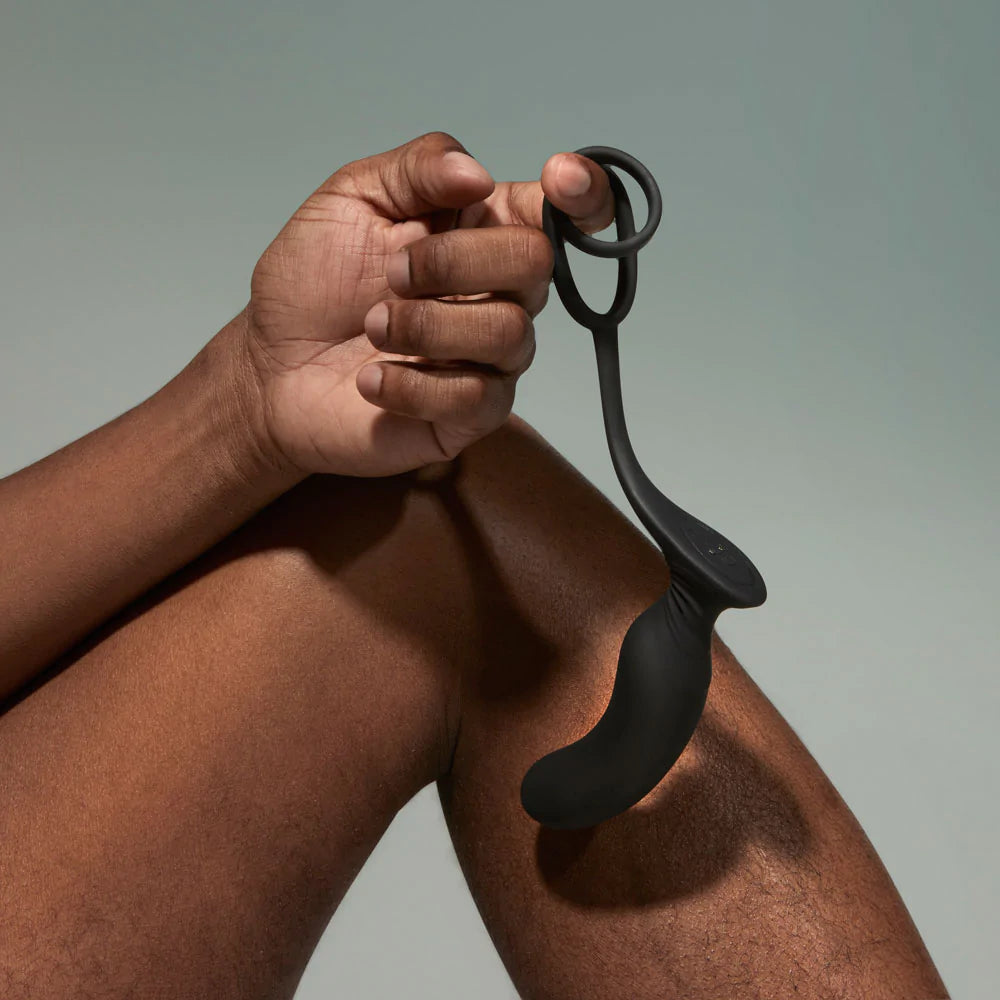
A purpose-built prostate massager is anatomically shaped to reach the gland comfortably and stay there hands-free. It's medical-grade silicone. It's designed for one thing, which is pleasure. It's not espionage gear, it's not a punchline, and it's not a fringe curiosity.
GIDDI builds in this category — anatomically designed massagers, medical-grade materials, hands-free orgasms, thousands of reviews from real users. The category is bigger than the internet thinks. The gap between what it actually is and how the chess saga portrayed it is exactly the cultural distance the brand exists to close.
What to Take Away
Watch the doc. Enjoy the chess drama. Laugh at the rumor — it earned a laugh.
But notice how the joke works. Notice that the rumor outran the lawsuit, the settlement, and the actual investigation. Notice that a cam site offered seven figures to publicly humiliate someone and a lot of people thought that was reasonable. Notice that the world's biggest chess platform monetized the entire thing, and that we're still talking about it four years and one Netflix budget later.
The Niemann–Carlsen story will be remembered as a cultural moment. The interesting question is whether the next one finally lets prostate pleasure exist as what it actually is — a normal, well-engineered, deeply enjoyable category that has nothing to do with chess at all.
Give Your Prostate Wings. Curious about the category for the right reasons?